
Mumbai Monsoon Street Food 2026: Kanda Bhajiya, Vada Pav, Chai & More
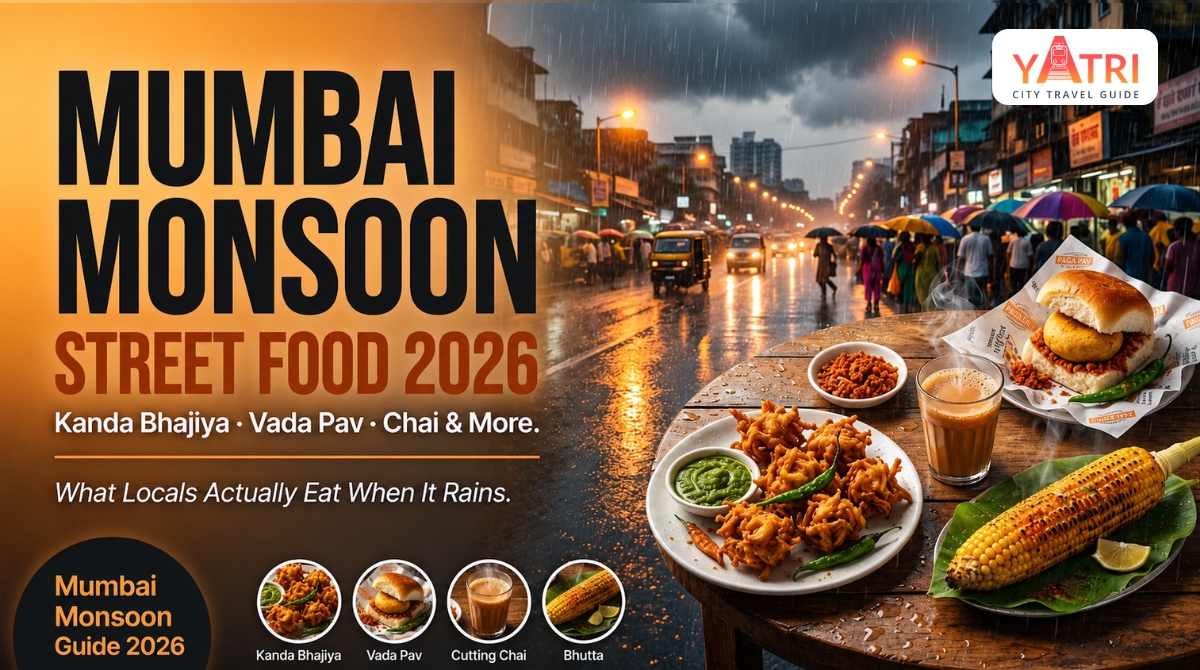
There’s regular Mumbai food…and then there’s Mumbai monsoon food. Because somehow, cutting chai tastes better in rain, vada pav feels more emotional during train delays, and every street-side snack suddenly becomes part of surviving the season.
Mumbai during monsoon changes everything.
The roads flood, local trains slow down, umbrellas fail dramatically, traffic becomes a city-wide patience test.
And yet somehow, one thing always improves during rain:
Mumbai monsoon and street food share a very special relationship.
The moment clouds appear people immediately start craving:
- Hot chai,
- Crispy bhajiyas,
- Spicy misal pav,
- Buttery corn,
- Roadside snacks that somehow taste better only during rain.
Even office workers pretending to eat healthy suddenly abandon discipline the second somebody says:
“Chai aur pakoda?” And honestly, nobody blames them.
Because rainy season in Mumbai isn’t complete without standing near a crowded stall holding hot food while watching traffic suffer nearby. So if you’re looking for the best Mumbai monsoon street food in 2026, here are the rainy-day snacks every Mumbaikar eventually becomes emotionally attached to.
1. Vada Pav: Mumbai’s Official Rain Survival Food
No list begins anywhere else. Vada pav during monsoon isn’t just food anymore.
It’s an emotional support. Something about hot potato filling, spicy chutney, soft pav, and rain outside creates the perfect Mumbai experience instantly. Especially near railway stations.
You’ll find commuters standing under tiny shades eating vada pav while:
- waiting for delayed trains,
- discussing traffic,
- or silently recovering from life choices.
And somehow, every Mumbaikar has one “trusted” vada pav stall they defend like family property.
Fun fact: Mumbai people can tolerate heavy rain surprisingly well as long as chai and vada pav remain available nearby.
2. Cutting Chai: The Real Hero of Mumbai Monsoon
There’s chai. And then there’s cutting chai during heavy rain there is a completely different emotional experience. The second rain starts, chai stalls across Mumbai suddenly become social gathering points.
- Office workers.
- College students.
- Auto drivers.
- Commuters.
Everyone somehow ends up standing near tea stalls discussing weather like professional climate experts.
And honestly, after:
- wet shoes,
- delayed trains,
- flooded roads,
- collapsing umbrellas,
hot cutting chai genuinely feels therapeutic. Especially with extra ginger during cold evenings.
3. Bhajiyas & Pakodas: Peak Rainy Day Comfort Food
Mumbai monsoon officially activates bhajiya season. The smell alone becomes impossible to ignore during rain.
You’ll find stalls frying:
- Onion bhajiyas,
- Potato pakodas,
- Mirchi bhajiyas,
- Paneer pakodas
while rain pours outside dramatically. And somehow, standing near hot oil during cold rainy evenings feels comforting instead of concerning. Especially when served with spicy green chutney and chai. Honestly, diet plans don’t survive Mumbai monsoon emotionally.
4. Bhutta: The Most Underrated Monsoon Snack
Few things feel more “Mumbai monsoon” than eating roasted bhutta beside the sea during rain.
Especially near:
- Marine Drive,
- Juhu Beach,
- Bandstand,
- Carter Road.
The smoky flavour, lemon-chilli masala, and cool sea breeze somehow create one of the simplest yet most satisfying monsoon experiences in the city. And every bhutta vendor somehow seasons corn with suspiciously perfect accuracy.
5. Misal Pav: Spicy Enough to Fight Rain Itself
When Mumbai weather becomes cold and gloomy, misal pav suddenly feels necessary.
Hot gravy with crunchy farsan and soft pav building up the aggressive spice levels is just a perfect combination. Monsoon mornings specially make misal pav taste significantly better for reasons science probably cannot explain.
Fun fact: Many Mumbaikars sweat while eating misal pav even during cold rainy weather. Nobody stops eating though.
6. Maggi at Hill Stations Near Mumbai
Technically not “street food,” but monsoon Maggi culture near Mumbai deserves respect.
The moment people visit:
- Lonavala,
- Matheran,
or just nearby trekking spots, hot roadside Maggi suddenly becomes mandatory. And somehow, foggy weather automatically increases Maggi quality emotionally. Especially after trekking in rain.
7. Pav Bhaji: Butter, Rain & Happiness
Mumbai pav bhaji during monsoon feels heavier, richer, and more satisfying somehow.
The smell of butter hitting hot tawa during rainy evenings near crowded food stalls feels impossible to resist.
Especially at:
Girgaon Chowpatty and CST food lanes or station-side stalls.
Add extra butter, cold weather, and slight train delays suddenly life feels manageable again.
8. Street-Style Chinese Food During Rain
Every Mumbai neighbourhood has that one Chinese stall operating under impossible weather conditions during monsoon. Steam rising from giant woks. People standing under plastic covers waiting for noodles. Rainwater dangerously close to food counters. Pure Mumbai energy.
And despite questionable hygiene confidence occasionally, roadside Chinese food remains undefeated during rainy evenings.
Especially: schezwan noodles, triple rice and crispy fried starters.
9. Bun Maska & Chai: Old Mumbai Monsoon Mood
Irani cafés during rain feel cinematic in the best way possible. Sitting near windows while rain hits old Mumbai roads, eating warm bun maska with chai, genuinely feels peaceful after chaotic city travel.
Especially near:
- CST,
- Marine Lines,
- South Mumbai areas.
This is the slower side of Mumbai monsoon people don’t talk about enough.
.png)
Why Food Tastes Better During Mumbai Rain?
Maybe it’s psychological or maybe surviving Mumbai monsoon simply makes people appreciate comfort food more.
Because after:
- Train delays,
- Flooded roads,
- Traffic chaos,
- Wet clothes,
- Exhausting commutes,
simple hot food suddenly feels deeply satisfying. Rain slows the city emotionally. People pause more, they stand near stalls longer talking more.
They eat without rushing for once. And maybe that’s why monsoon food culture feels so personal in Mumbai.
Monsoon Street Food Tips in Mumbai:
- Choose Crowded Food Stalls
In Mumbai, crowded stalls probably mean:
- Fresh food,
- Fast turnover,
- Trusted quality.
Especially during monsoon season.
- Carry Cash: UPI works in most places now, but smaller roadside stalls sometimes still prefer cash.
- Avoid Over-Adventurous Experiments During Heavy Rain
- Your stomach and Mumbai monsoon already have enough challenges.
- Choose trusted food spots whenever possible.
Rain + Chai = Mandatory Combination
This isn’t really a tip.
It’s just Mumbai law at this point.
How Yatri Makes Your Mumbai Monsoon Street Food Hunt Easier?
Here's the thing nobody talks about when planning a monsoon street food run in Mumbai. The food is never the hard part. The hard part is getting there.
Because Mumbai monsoon doesn't just change the weather. It changes every single mode of transport simultaneously. Trains run late. Roads flood. Autos disappear. And standing confused at a crowded station at 7 PM in the rain, trying to figure out if your train is delayed or cancelled while your bhajiya craving reaches critical levels, is a very specific kind of suffering.
That's exactly where Yatri becomes useful.
Live GPS Train Tracking means you know exactly where your train is in real time not a guess, a live location. So instead of standing on Platform 3 in denial for 40 minutes, you know whether to wait or find bhajiya nearby while you kill time productively.
Real-Time Mega Block & Delay Alerts push directly to your phone. Monsoon season on Central and Western Railway means landslide disruptions, waterlogging delays, and sudden cancellations. Yatri tells you before you're already at the station giving you time to reroute or at least order another cutting chai.
Latest Timetables for Trains, Bus, Metro & Monorail in one place means getting from your neighbourhood to Dadar for vada pav, or Juhu for bhutta, or Marine Drive for that monsoon walk with cutting chai doesn't require four separate apps with wet fingers.
Railway SOS Service because monsoon commutes on packed trains occasionally go wrong. Yatri's SOS feature gives direct access to Railway Medical Emergency services. Not something you hope to use, but genuinely good to have on days when the city is at its most chaotic.
Basically: Yatri is the app that handles the commute so you can focus entirely on what actually matters during Mumbai monsoon. The food.
.png)
The Real Connection Between Mumbai & Monsoon Food:
Monsoon food culture in Mumbai isn’t just about taste. It’s about routine.
- People remember:
- Chai stalls near stations,
- Late-night bhajiya runs,
- Rainy college evenings,
- Office tea breaks,
- Roadside snacks shared with friends during traffic jams.
Food becomes part of the memory. And maybe that’s why every rainy season feels nostalgic here even when the city is struggling through floods and delays again. Because somewhere between the chaos, hot street food quietly makes Mumbai feel comforting.
Final Thoughts:
Mumbai during monsoon is messy, crowded, frustrating, and completely unpredictable, but it’s also the season when the city feels most alive emotionally. The smell of frying bhajiyas, the sound of rain hitting chai stalls, steam rising from roadside food carts. People standing together under tiny shop shades eating hot snacks.
These small moments become part of the Mumbai monsoon experience itself. Because in this city, rain doesn’t just change the weather. It changes what people crave, where they gather, and how comfort feels.
And honestly, nothing explains Mumbai better than eating hot vada pav during heavy rain while your local train gets delayed in the background.
FAQs:
1. What is the most popular street food in Mumbai during monsoon?
Vada pav is the undisputed king of Mumbai monsoon street food. Hot potato filling, spicy chutney, soft pav, and rain outside the combination is a deeply personal Mumbai experience, especially near railway stations. After vada pav, kanda bhajiya is the most craved monsoon snack crispy onion fritters served hot with green chutney and cutting chai, available at virtually every street corner from June onwards. Misal pav, pav bhaji, and roasted bhutta round out the essential monsoon street food list that every Mumbaikar cycles through between June and September. The honest truth: Mumbai monsoon street food isn't about restaurants. It's about crowded stalls, wet pavements, and food that tastes inexplicably better in the rain.
2. Why does street food taste better during Mumbai monsoon?
There's a real reason and a Mumbai reason. The real reason: lower monsoon temperatures (24–28°C) make hot, fried, spicy food more satisfying because the body craves warmth and quick energy in cool, humid weather. The Mumbai reason: after surviving train delays, flooded roads, collapsed umbrellas, and 40 minutes of traffic on a 5-minute road, simple hot food hits differently. Cutting chai stops being a beverage and becomes emotional support. Kanda bhajiya near a crowded station stall feels like a reward for enduring the commute. Mumbai monsoon slows the city emotionally people stand longer at stalls, pause more, eat without rushing and that changes how everything tastes.
3. Is it safe to eat street food in Mumbai during monsoon 2026?
Yes with one rule: choose crowded stalls. In Mumbai, a crowded stall means high turnover, which means fresher food, faster cooking, and less time for anything to sit around in monsoon heat. The safest monsoon street foods are those cooked fresh to order directly in front of you vada pav, kanda bhajiya, bhutta, cutting chai, and pav bhaji all qualify. Foods to be cautious with during monsoon: pre-cut fruits from open stalls, pani puri from vendors without covered water storage, and anything that's been sitting out during heavy rain. The general Mumbai street food rule during monsoon trust the queue. If people are waiting for it, it's worth eating and almost certainly fresh.
4. Where is the best place to eat kanda bhajiya and vada pav in Mumbai during monsoon?
For vada pav, Ashok Vada Pav at Dadar (near Kirti College) is the most cited name in Mumbai running since the 1970s and consistently crowded during monsoon evenings. For kanda bhajiya, the best version is always at whichever stall is busiest near your nearest railway station Dadar, Andheri, Borivali, and CST all have legendary stall clusters that operate through monsoon. For misal pav, Mamledar Misal in Thane is the benchmark most Mumbaikars defend passionately. For bhutta, Marine Drive, Juhu Beach, Bandstand, and Carter Road are the iconic monsoon locations smoky coal-roasted corn with lemon-chilli masala and sea breeze is a combination that doesn't need a restaurant. For pav bhaji, Sardar Refreshments in Tardeo has been running since 1966 and remains the gold standard.
Dated July 10, 2026