
Busiest Railway Stations in Mumbai: 10 Most Crowded Mumbai Local Train Stations.
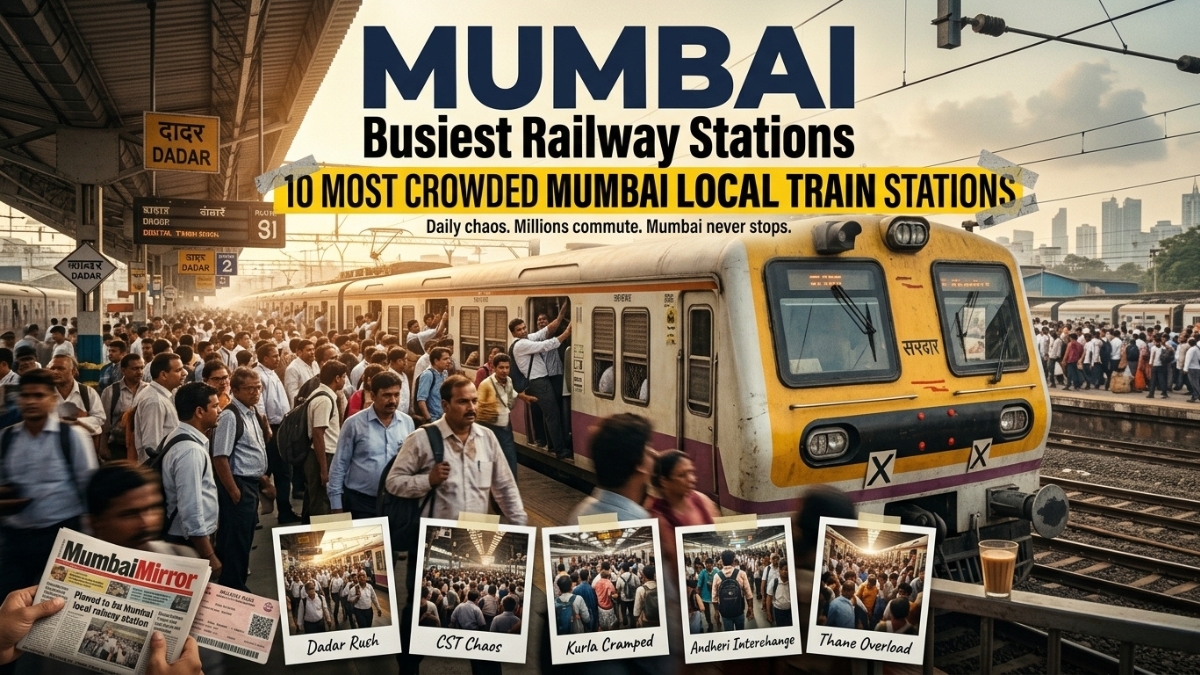
If you’ve survived getting down at Dadar during rush hour, congratulations you can survive almost anything. Mumbai local stations ranked by crowd, chaos, and the daily survival stories of millions of commuters.
Mumbai doesn’t wake up slowly. It explodes into motion every single morning.
Before sunrise fully hits the city, chai stalls outside railway stations already start serving tired commuters. Local trains begin filling up within minutes, platform announcements echo nonstop, and thousands of people somehow move together in complete chaos without the city collapsing.
That’s Mumbai. The Mumbai local train network is often called the lifeline of Mumbai, and honestly, no other phrase explains it better. More than 7 million passengers travel daily through this railway system, making it one of the busiest suburban rail networks in the world.
But among all these stations, some stand out for one reason absolute madness.
These are the stations where:
- Crowds move like human waves,
- Trains fill before they even stop,
- Footbridges feel like traffic jams,
- Commuters somehow still manage to reach work every single day.
For regular Mumbaikars, these stations are routine. For first-time travelers, they feel like survival tests. So here’s a realistic ranking of the most crowded and busiest railway stations in Mumbai, mixed with commuter experiences, fun facts, survival tips, and the everyday chaos that somehow keeps this city alive.
Top 10 Busiest Mumbai Local Train Stations: Could You Survive The Crowd?
1. Dadar Railway Station; Mumbai’s Ultimate Survival Test
If Mumbai had a final boss level, it would probably be Dadar station during evening rush hour.
Dadar connects:
- Western Line
- Central Line
- Long-distance trains
- Nearby metro connectivity
Which basically means everyone passes through it eventually. And because of that, Dadar feels crowded almost every hour of the day.
The footbridges become human traffic jams, people run in every direction simultaneously, and getting down from trains sometimes feels physically impossible. Yet millions do it successfully every day.
Fun fact: Dadar is considered one of India’s busiest interchange railway stations.
2. Kurla Railway Station; Controlled Chaos
Kurla station feels like pure confusion somehow functioning perfectly.
It connects:
- Central Line
- Harbour Line
- Eastern suburban routes
During peak hours, the station becomes unbelievably crowded. Platforms overflow, trains fill instantly, and changing platforms feels like navigating through moving walls. But regular commuters move through Kurla effortlessly like they’ve memorized every crowd pattern. Which, honestly, they probably have.
3. Andheri Railway Station; The Western Line Battlefield
Andheri is where office life and Mumbai local chaos collide.
Students, corporate employees, airport travelers, metro users everyone eventually ends up at Andheri station. The station remains crowded almost throughout the day because of:
- Metro connectivity
- Western Line traffic
- Nearby business districts
Morning rush here feels endless. And during monsoon season? Absolute cinema.
4. Thane Railway Station; The Daily Entry Point to Mumbai
Thane station handles massive crowds because thousands travel daily from outer suburbs into Mumbai for work.
Morning locals arriving from Thane are usually packed before they even enter central Mumbai. And evening return journeys somehow feel even more exhausting.
Fun fact: Thane is one of the busiest suburban stations outside core Mumbai city limits. And NO, Thane is not considered in Mumbai.
5. Chhatrapati Shivaji Maharaj Terminus (CST):
CST feels different from every other station. Announcements never stop, trains constantly arrive and leave, and platforms remain crowded almost all day.
From outside, it looks historic and beautiful. Tourists stop constantly for photographs because the architecture genuinely looks cinematic. But inside? Classic Mumbai chaos.
Still, there’s something strangely iconic about CST that makes the chaos feel memorable instead of frustrating.
6. Churchgate Railway Station:
Churchgate becomes crowded because it serves South Mumbai’s massive office population.
- Every evening looks almost identical:
- Thousands rushing toward platforms,
- People sprinting for fast trains,
- Office workers half-running with backpacks and laptops.
And yet, just minutes away from all this stress sits Marine Drive,calm, peaceful, and completely opposite to station life. That contrast feels very Mumbai somehow.
7. Borivali Railway Station:
Borivali represents suburban Mumbai pressure perfectly. Long-distance commuters heavily depend on this station, which means fast locals become packed almost instantly during office hours.
Despite the crowd, Borivali remains one of the most important stations for people living in northern Mumbai suburbs.
8. Ghatkopar Railway Station:
Ghatkopar changed massively after metro connectivity improved.
Today, it acts as a major interchange point between:
- Central Line
- Mumbai Metro
Which means the station rarely feels empty anymore. The crowd here perfectly represents modern Mumbai fast-moving, constantly changing, and always in a hurry.
9. Bandra Railway Station:
Bandra station combines:
- College students,
- Office commuters,
- Tourists,
- Shoppers,
- Regular local travelers.
The station itself stays active throughout the day, while nearby roads remain equally crowded with autos, cafés, buses, and street shopping crowds. Compared to Dadar, Bandra feels slightly calmer. But only slightly.
10. Kalyan Railway Station:
Kalyan handles huge suburban traffic because many people living far outside Mumbai depend on it daily. And when train delays happen, the crowd pressure increases instantly. For many commuters, Kalyan is the starting point of very long workdays. Office timings make the station extremely crowded, especially during mornings and evenings.
.png)
Mumbai Local Survival Guide: How the Yatri App Helps During Mumbai Local Chaos!
If Mumbai locals are the city’s lifeline, app like Yatri have quietly become survival tools for daily commuters.
Because the reality is simple: Mumbai’s railway system moves extremely fast, and one small mistake can affect your entire journey.
- Missing the wrong train at Dadar.
- Standing on the incorrect platform at Andheri.
- Boarding a fast local accidentally.
- Getting stuck during monsoon delays.
These situations happen every single day across Mumbai. And during crowded rush hours, confusion creates stress much faster than crowds themselves. That’s where the Yatri app becomes practical instead of just convenient.
Live Train Timings Reduce Uncertainty:
One of the most frustrating parts of travelling through crowded stations is uncertainty. Standing on a packed platform without knowing whether your train is arriving in 2 minutes or 20 minutes quickly becomes mentally exhausting especially after office hours.
Yatri’s live train timing feature helps commuters plan their movement properly instead of waiting blindly in crowded stations. And in Mumbai, timing changes everything.
Catching one earlier train can mean:
- Getting a seat,
- Avoiding extreme crowd pressure,
- Reaching home faster,
- Reducing travel fatigue after a long day
Platform Updates Becomes Extremely Valuable During Rush Hour:
Stations like Dadar, Kurla, CST, and Andheri can become genuinely confusing during peak timings. Announcements overlap constantly, crowds block visibility, and first-time travelers often end up following random groups of commuters hoping they’re heading in the correct direction.
The Yatri app helps simplify this confusion by providing:
- Platform numbers,
- Route details,
- Train destinations,
- Live updates in real time.
It sounds like a basic feature until you experience Mumbai rush hour personally. At that moment, clear information feels incredibly valuable.
Fast and Slow Train Identification Prevents Common Mistakes:
Many first-time commuters accidentally board fast locals without realizing certain stations are skipped entirely.
That single mistake often leads to:
- Delayed travel,
- Unnecessary stress,
- Crowded station switching,
Frustration after an already exhausting day.
Yatri clearly identifies:
- Fast trains,
- Slow trains,
- Route patterns,
- Station stops, Station Platform Numbers
Making navigation much easier for beginners and commuters.
Monsoon Season Makes Real-Time Updates Essential:
Mumbai monsoons completely change local train behavior.
- Train delays increase.
- Platforms become more crowded.
- Footbridges get slippery.
- Announcements become constant.
- Panic spreads quickly whenever routes slow down.
During these situations, many commuters end up spending unnecessarily on cabs or autos simply because they assume trains have stopped functioning properly.
.png)
App like Yatri helps commuters stay informed calmly instead of reacting emotionally to crowd panic.
Real-time updates allow users to:
- Track delays,
- Monitor train movement,
- Choose alternate routes,
- Avoid unnecessary stress during difficult travel conditions.
And honestly, during Mumbai monsoons, reducing stress sometimes feels more important than saving money.
Travelling Light Makes a Bigger Difference Than You Think
Mumbai stations involve much more walking than most people expect.
Platform changes, footbridges, metro connections, station exits everything adds up quickly, especially during crowded hours. That’s why experienced commuters usually prefer compact backpacks instead of carrying large bags whenever possible.
In Mumbai locals, practicality always matters more than comfort. Especially during humid summers or heavy monsoon days. Mumbai Railway Stations Slowly Start Feeling Familiar. One interesting thing about Mumbai locals is how quickly strangers adapt to them. At first, stations feel chaotic and intimidating.
But gradually, commuters begin recognizing patterns:
- Which platform gets crowded first,
- Where to stand for easier exits,
- Which trains are usually delayed,
- How crowd movement works during peak hours.
Even stations begin developing personalities in your mind.
- Dadar feels aggressive.
- Churchgate feels corporate.
- Bandra feels energetic.
- CST feels cinematic.
- Kurla feels like organized confusion.
And eventually, without realizing it, you begin moving through them naturally too. That’s usually the moment when Mumbai starts feeling less overwhelming and more familiar.
Final Thoughts
Mumbai railway stations are exhausting, crowded, loud, and unpredictable. There’s nothing glamorous about getting pushed into packed trains during humid evenings or climbing crowded footbridges after a long workday.
- Some journeys feel frustrating.
- Some delays feel endless.
- And some crowds genuinely test your patience.
But despite all of this, Mumbai locals continue carrying millions of people every single day without the city stopping for even a moment. Because these trains carry more than passengers.
They carry:
- Routines,
- Responsibilities,
- Deadlines,
- Ambitions,
- Entire lives moving together constantly.
And maybe that’s why surviving stations like Dadar or Kurla becomes a strange badge of honour for regular commuters. At first, Mumbai locals feel chaotic. Then they become familiar. And eventually, you stop feeling like a visitor and start moving like the city itself.
Because Mumbai locals don’t just teach people how to travel. They teach adaptation, patience, resilience, timing, and the ability to keep moving forward no matter how crowded life becomes.
Q. Which is the busiest railway station in Mumbai local train network?
Ans. Dadar Railway Station is the busiest railway station in Mumbai's local train network. It serves as a major interchange connecting the Western Line, Central Line, and long-distance trains simultaneously. During peak hours, Dadar handles lakhs of passengers daily, making it one of the most crowded railway stations not just in Mumbai but in all of India.
Q. How many passengers travel in Mumbai local trains every day?
A. Mumbai local trains carry over 7 million passengers every single day, making it one of the busiest suburban railway networks in the entire world. This daily ridership is higher than the entire population of many countries, which is why Mumbai locals are commonly called the lifeline of Mumbai.
Dated May 28, 2026